

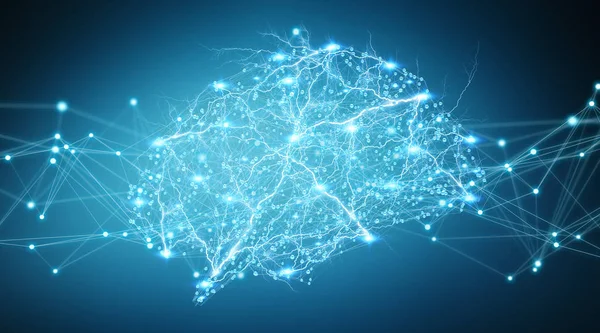
Neural networks are inspired by the structure of the human brain. They consist of layers of nodes (called neurons) that process information by passing signals forward. Each neuron receives multiple inputs, applies weights, and produces an output. When a neural network is trained, these weights adjust gradually to minimize the difference between predicted outputs and correct outputs.
Deep learning models use multiple layers to understand complex patterns in images, speech, or text. Convolutional Neural Networks (CNNs) are specialized for image recognition by detecting patterns like edges and shapes. Recurrent Neural Networks (RNNs) are designed for sequential data like language and time series. Transformers, more recent architectures, can handle long sequences effectively and are used in advanced language models.
Learning happens through a process called backpropagation, where the model compares predictions to correct values and adjusts itself. The better the dataset and training process, the more accurate the model becomes.
Neural network careers span healthcare, finance, e‑commerce, automotive, and defense. Professionals skilled in model building, tuning, and interpretability are in strong demand as AI-powered automation accelerates across industries.